Components of Dental Implants

Components of Dental Implants

What actually are the components of Dental Implants? The Dental Implant Complex comprises a series of parts that are stacked on each other and bolted or cemented together.

At the base of the complex is the dental implant fixture. This is usually a titanium or titanium alloy screw that is inserted into the jaw bone with a minor surgery. Implant fixtures made of other materials such as Zirconia are also available.

After a period of healing, the jaw bone fuses with the implant fixture, stablizing it and anchoring it to the bone. This usually takes 2-3 months.

At this point, an impression is made to register the position, depth and angulation of the dental implant fixture. This can be done with a conventional silicone impression or digitally via an intraoral scan. An analog or digital model is then fabricated.

Depending on the type of restoration that is being planned, the parts for the dental implants will differ. For single crowns and bridges, the restorations can be cemented or screw retained. For cemented restorations, a titanium or ziconia post is connected to the impant fixture. Based on the design of the abutment, these can be fixed with a retaining screw, or directly screwed into the dental implant fixture.

The crown or bridge is then fabricated, similar to what is done with tooth-bourne restorations, and the restoration is cemented onto the implant abutments.

Screw-retained implant restorations do not use an abutment. Instead the restoration is bolted directly to the dental implant fixture with a retaining screw. The restoration can be a single piece, with porcelain baked directly onto a metal framework or a monolithic zirconia crown or bridge. Alternatively, it can be a zirconia restoration that is cemented onto a titanium base.

Screw-retained restorations are technically more difficult to make and deliver, but they use less components, resulting in a lower complication rate. They are also easier to maintain.

In the case of implant-retained dentures, specialized parts, such as locator attachments, are connected to the implant fixtures. The complementary parts are embedded into the denture. These attachements allow the dentures to clip on to the dental implants, improving retention and stability.

If you wondering if you are a good candidate for dental implant therapy, Contact Us today to arrange an appointment. We will do a comprehensive clinical and radiographic examinations, and advise you on your options.

Managing Dental Implant Angle

Managing Dental Implant Angle

Is your dental implant angle off? you facing challenges with dental implants that are not in an ideal position? 

Whether the dental implant angle was a deliberate decision to avoid bone grafting or a surgical oversight, we understand the need for a solution.

Our expertise lies in compensating for misangulated implants prosthetically, using specialized components.

By carefully considering factors such as angulation, position within the bone, and implant depth, we can devise a bespoke plan to rectify the situation.

In more severe cases where the misalignment is substantial, implant removal procedures may be necessary, followed by grafting and healing.

Once the site is ready, we can place a new implant in a more optimal position and restore it to ideal function and aesthetics.

If the malignment is mild, a cemented restoration can be used to restore the clinical portion of the tooth. A ceramic or metal post is connected to the dental implant with a retaining screw, then a crown is fabricated to fit this abutment. This is similar to crowns which are done on teeth.

Care has to be taken during the cementation to ensure that all the excess cement is removed, to prevent the extra cement from causing infection under the gums.

The main disadvantage of a cemented crown is retrievability of the crown. Occassionally, the crown may need to be removed for maintenance of the implant. Cemented crowns sometimes cannot be removed without breaking, and a new crown might need to be fabricated.

Specialized parts known as angled multiunit abutments can occassiuonally be used to redirect the direction of the implant retention screw.

These come in predetermined angulations, resulting in some limitations to how much correction can be made.

The extra parts increase prosthetic complications as well as the cost of restoring the implant.

A more innovative solution has been the development of dynamic axes screws, such as the Dynamic Abutment. These sophisticated screws allow for engagement at an offset of up to 25 degrees. In most cases, this is sufficient to redirect the access hole from the outer surface of the crown to the inner surface.

They not only do not require additional restorative space, but do not require additional components. The conventional abutment screw is exchanged for the dynamic axis screw.

These can be used either as part of a conventional analog work flow, or as part of a integrated digital CAD/CAM workflow.

The reduced number of parts and the larger implant retaining screw also decrease the incidence of prosthetic problems.

These revolutionary screws have significantly impacted how these cases can be managed, reducing the number of implants that have to be removed and lowering the costs of restoring these cases.

IS THIS AN ISSUE THAT YOU HAVE A PROBLEM WITH?

CONTACT US TODAY TO LEARN WHAT IS POSSIBLE

Something Broke!

Something Broke!

One complication can occur with dental implants is that something broke. Fracture of the dental implant or the implant restoration is not as uncommon as you may think. So what should you do if you encounter a breakage?

Firstly, we need to determine where the breakage occurred. The fracture could be at several different places. The dental implant (or fixture) could have fractured. Or the screw connecting the implant crown to the fixture could have broken. The implant crown could have split or the veneer porcelain of the implant crown could have chipped off.

The necessary treatment will depend on the location of the breakage. Simple solutions could range from simply smoothening out the porcelain surface, to changing the retaining screw. Should a catastrophic fracture of the fixture occurred, this would require surgical removal of the broken implant and possible replacement after a period of healing.

Should you be unfortunate enough to have encountered a breakage, do not hesitate to contact us! In addtion, any information you can provide us regarding your dental implant will be most relevant.

We will perform a comprehensive examination, complete with the relevant dental imaging. Finally, once we diagnose what your specific issue is, we will let you know exactly what your problem is and what needs to be done fix it.

IF YOU ARE FACING A SIMILAR ISSUE, CONTACT US

TO LEARN WHAT OPTIONS ARE AVAILABLE TO YOU


Implant Fracture – Flange Fracture – Case Study

Implant Fracture – Flange Fracture – Case Study

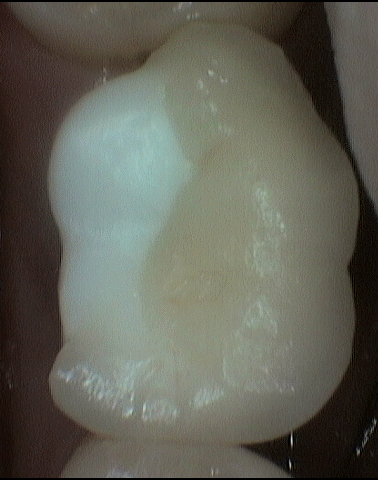
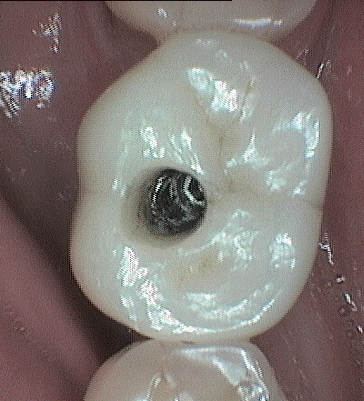
Michael* presented at our clinic complaining that the dental implant crown on the lower right side of his mouth  was rotating. The implant had been placed and restored 4 years previously. Clincial examination revealed the presence of a screw retained crown on #46 that had rotated anti-clockwise, resulting in a gap between #46 and 45. We did not initially suspect an dental implant fracture.

Radiographic examination revealed the presence of a gap between the impant crown and the fixture platform. There was angular bone loss on either side of the implant, but was more pronounced on the mesial aspect of the fixture.

There also appeared to be a delamination of part of the implant below the mesial part of the fixture platform. We had not expected that the rotation of the crown was due to an implant fracture.

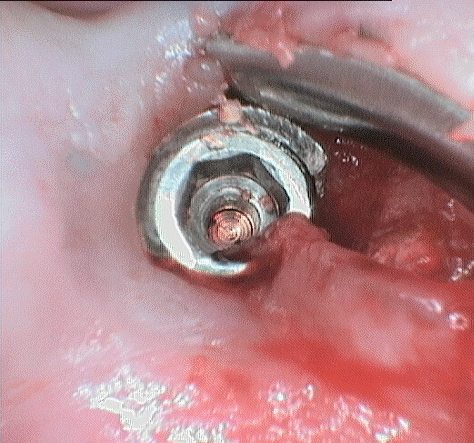
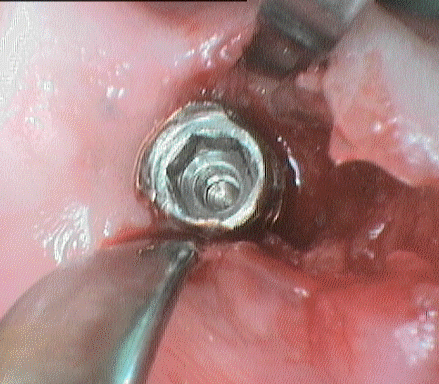
The screw-retained implant crown was removed and the fixture platform was exposed. There was complete fracture of about 40% of the lip of the fixture platform flange on the mesial part of the implant.

There was also a partial implant fracture of about 20% on the lingual aspect of the implant fixture. A flap was raised and the fractured portion of the flange was removed and the fixture was smoothened.

The flap was closed with a resorable suture and the screw-retained crown was then reconnected and the occlusion was adjusted to ensure there was no uneven occlusal contacts.

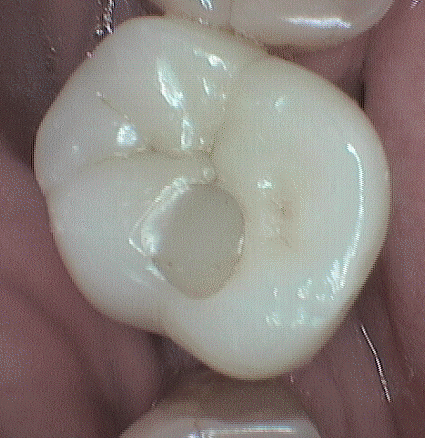
The abutment screw was tightened to the torque prescribed by the manufacturer and the access cavity was filled.

The patient was aware the implant fracture severely afftected the prognosis of the dental implant, and the dental implant would need to be removed if another implant fracture occurred.

*Not his real name.

ARE YOU DEALING WITH A SIMILAR ISSUE?

CONTACT US TO LEARN HOW IT CAN BE RESOLVED

Catastrophic Implant Fracture – Implant Fixture – Case Study

Catastrophic Implant Fracture – Implant Fixture – Case Study

Occassionally, we encounter cases of implant fracture in clinical practice. Sometimes, modifications can be made to the fixture without having to remove them. At other times, the implant fracture is catastrophic and the fixture will need to be removed and replaced.

Steve* presented at our clinic complaining that his implant crown on the lower left side of his mouth was moving. The cliincal exam showed that the #36 implant crown was slightly mobile.

Radioographic analysis showed that ther was about 40% bone loss from the coronal portion of the implant fixture. The apical portion of the fixture appears to be well integrated, and no obvious fracture was noted of the implant fracture.

The initial diagnosis was that the cemented implant crown had decemented, and the patient was advised to have the crown removed, cleaned and recemented.

The area was anesthetized and an attempt was made to remove the implant crown on #36.

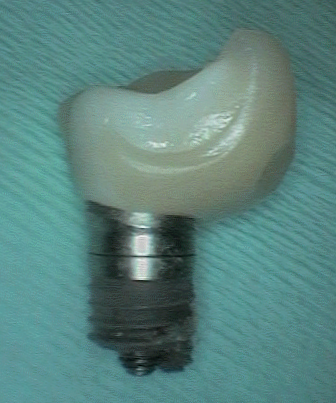
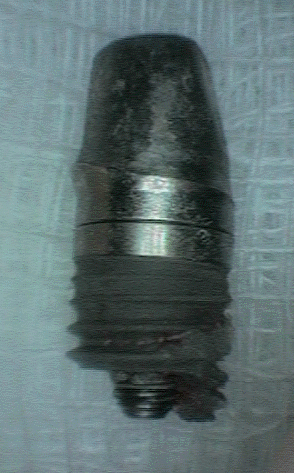
The coronal portion of the implant fixture was removed during the crown removal attempt. It was then that we realised that there had been a catastrophic implant fracture of the implant fixture at the level of the base of the abutment screw.

Analysis of the implant crown revealed that the cemented crown had a large buccal cantilever, which may have resulted in in excessive bending forces being exerted on the implant fixture, resulting in the implant fracture.

The bone loss around the implant could have happened before or after the catastrophic fracture of the implant fixture, due to the bending moments on the implant fixture.

The lower portion of the implant fixture surgically removed. After the site had healed, a new implant fixture was inserted to replace tooth #36.

*Not his real name

DO YOU HAVE A PROBLEM WITH YOUR IMPLANT?

CONTACT US TO SEE WHAT CAN BE DONE

Dental Implant or Root Canal Treatment?

Dental Implant or Root Canal Treatment?

Dental Implants are the ideal method of replacing missing teeth, or teeth that are severely broken and require extraction. However, you must remember that Dental Implants are foreign bodies that can be rejected by your body. While the success rate of Dental Implant therapy is very high, up to 97%, there is always a chance of failure. If your tooth has a good prognosis, you should keep it, even if root canal treatment needs to be done. This is because the tooth is part of your body and will NEVER be rejected.

Patients today face a problem with the commercialization of dental treatment. Treatment recommendations to patients today may not be the most ethical. It is not uncommon to hear of patients who were told to extract structurally sound teeth and have them replaced by dental implants.

These patients are often informed that dental implants are better and stronger than natural teeth. They are then advised to extract their teeth and replace them with dental implants, rather than have root canal treatment and crowns done. This situation is the result of some clinics and dentists putting the bottom line ahead of the quality of patient care. This is just not right.

Remember, dental implants are the most ideal method of replacing MISSING teeth. They are NOT the best method of REPLACING TEETH. The two statements may seem similar at first glance, but they are markedly difference. Your own natural teeth are ALWAYS the BEST, and if possible, they should be saved.

If you ever feel in doubt of treatment advice you have been given, it is always good to get a second opinion to put your mind at ease.

Click on the link here to read an article comparing Dental Implant Therapy to Root Canal Treatment.