Implant Fracture – Flange Fracture – Case Study

Implant Fracture – Flange Fracture – Case Study

Michael* presented at our clinic complaining that the dental implant crown on the lower right side of his mouth  was rotating. The implant had been placed and restored 4 years previously. Clincial examination revealed the presence of a screw retained crown on #46 that had rotated anti-clockwise, resulting in a gap between #46 and 45. We did not initially suspect an dental implant fracture.
Radiographic examination revealed the presence of a gap between the impant crown and the fixture platform. There was angular bone loss on either side of the implant, but was more pronounced on the mesial aspect of the fixture.

There also appeared to be a delamination of part of the implant below the mesial part of the fixture platform. We had not expected that the rotation of the crown was due to an implant fracture.

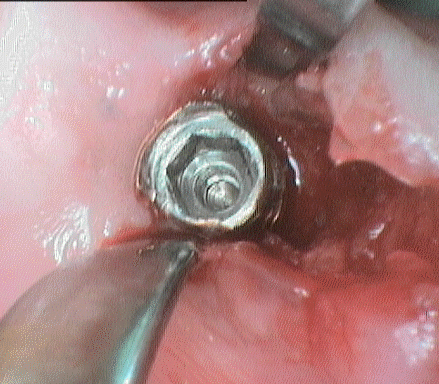
The screw-retained implant crown was removed and the fixture platform was exposed. There was complete fracture of about 40% of the lip of the fixture platform flange on the mesial part of the implant.

There was also a partial implant fracture of about 20% on the lingual aspect of the implant fixture. A flap was raised and the fractured portion of the flange was removed and the fixture was smoothened.

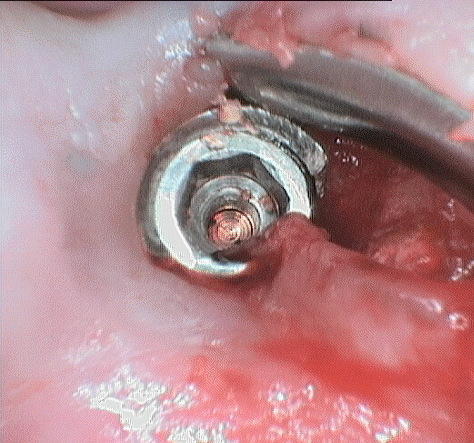
The flap was closed with a resorable suture and the screw-retained crown was then reconnected and the occlusion was adjusted to ensure there was no uneven occlusal contacts.

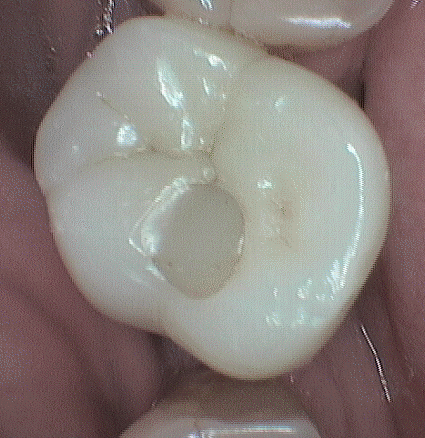
The abutment screw was tightened to the torque prescribed by the manufacturer and the access cavity was filled.

The patient was aware the implant fracture severely afftected the prognosis of the dental implant, and the dental implant would need to be removed if another implant fracture occurred.

*Not his real name.

ARE YOU DEALING WITH A SIMILAR ISSUE?

CONTACT US TO LEARN HOW IT CAN BE RESOLVED
Catastrophic Implant Fracture – Implant Fixture – Case Study

Catastrophic Implant Fracture – Implant Fixture – Case Study

Occassionally, we encounter cases of implant fracture in clinical practice. Sometimes, modifications can be made to the fixture without having to remove them. At other times, the implant fracture is catastrophic and the fixture will need to be removed and replaced.

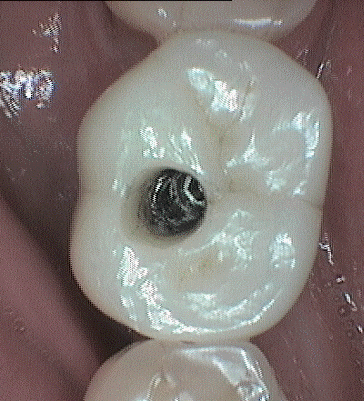
Steve* presented at our clinic complaining that his implant crown on the lower left side of his mouth was moving. The cliincal exam showed that the #36 implant crown was slightly mobile.

Radioographic analysis showed that ther was about 40% bone loss from the coronal portion of the implant fixture. The apical portion of the fixture appears to be well integrated, and no obvious fracture was noted of the implant fracture.

The initial diagnosis was that the cemented implant crown had decemented, and the patient was advised to have the crown removed, cleaned and recemented.

The area was anesthetized and an attempt was made to remove the implant crown on #36.

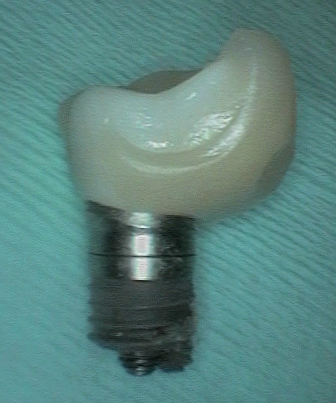
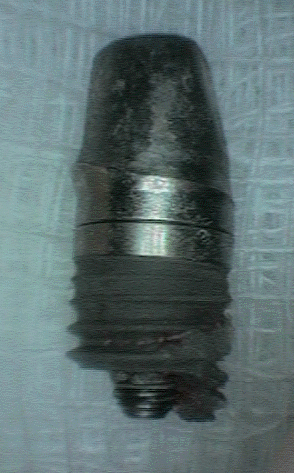
The coronal portion of the implant fixture was removed during the crown removal attempt. It was then that we realised that there had been a catastrophic implant fracture of the implant fixture at the level of the base of the abutment screw.

Analysis of the implant crown revealed that the cemented crown had a large buccal cantilever, which may have resulted in in excessive bending forces being exerted on the implant fixture, resulting in the implant fracture.

The bone loss around the implant could have happened before or after the catastrophic fracture of the implant fixture, due to the bending moments on the implant fixture.

The lower portion of the implant fixture surgically removed. After the site had healed, a new implant fixture was inserted to replace tooth #36.

*Not his real name

DO YOU HAVE A PROBLEM WITH YOUR IMPLANT?

CONTACT US TO SEE WHAT CAN BE DONE

How Dental Implants Work

How Dental Implants Work

Have you ever wondered how dental implants work? Dental implants are the optimal solution for replacing failing or missing teeth. They ideal as they do not affect the adjacent teeth, and can restore the function and aesthetics of the missing teeth.

The dental implant consists of several components that are stacked on top of each other. These components are then bolted or cemented together.

The implant fixture is the anchor that is embedded in the jaw bone. This serves as the foundation for the missing tooth. It is usually made of titanium or titanium alloy, although other materials such as zirconia have also been used.

The implant crown, is the replacement for the visible part of the tooth. It is connected to the  dental implants by a retaining abutment screw. The implant crown mimics the appearance and function of the missing tooth.

Whether you need to replace a single tooth or multiple teeth, our team is here to help. We will walk you through the process and conduct a through clinical and radiographi examination to see if you are a good candidate for dental implant treatment.

Contact us today to learn more about dental implants and how dental implants work.

WE ARE BACK

WE ARE BACK

Afterr a long break, we are restartng our dental implant blog. Moving forward, in addition to covering various aspects of implant dentistry, as well as discuss the clinical management of dental implant complications. We look forward to engaging with you .

Don't hesistate to Contact Us if you need any help.

Are Dental Implants Safe?

Are Dental Implants Safe?

One of the most commonly asked questions is "Are Dental Implants Safe?"

As with every procedure that is done, Patient Safety is of the utmost concern. It is natural for you to be concerned about how safe Dental Implants are.

The term Dental Implant used today generally refers to titanium endosseous (or endosteal) dental implants, which is titanium anchors which are inserted into the jaw bone. Historically, other types of dental implants include bladed implants, subperiosteal (under the gums) implants and transosteal (through the bone) implants.

When the titanium implant is made of commercially pure titanium, or titanium alloy that contains more than 85% of titanium, an inert, biocompatible layer of titanium dioxide will form on the surface of the metal. Bone cells will then fuse to this layer, resulting in osseointergration, that is the implant being integrated with the bone.

The type of dental implants commonly used today were first inserted by Dr PI Branemark in 1965 into patient volunteers. These first patients were then monitored by up to 10 years to ensure that the new procedure was safe and effective. The first dental implants placed were in service for 40 years, when the patient passed away with these implants still integrated to the jaw bone.

Need More Information?